
Pakungwati Journal of Islamic Law and Society
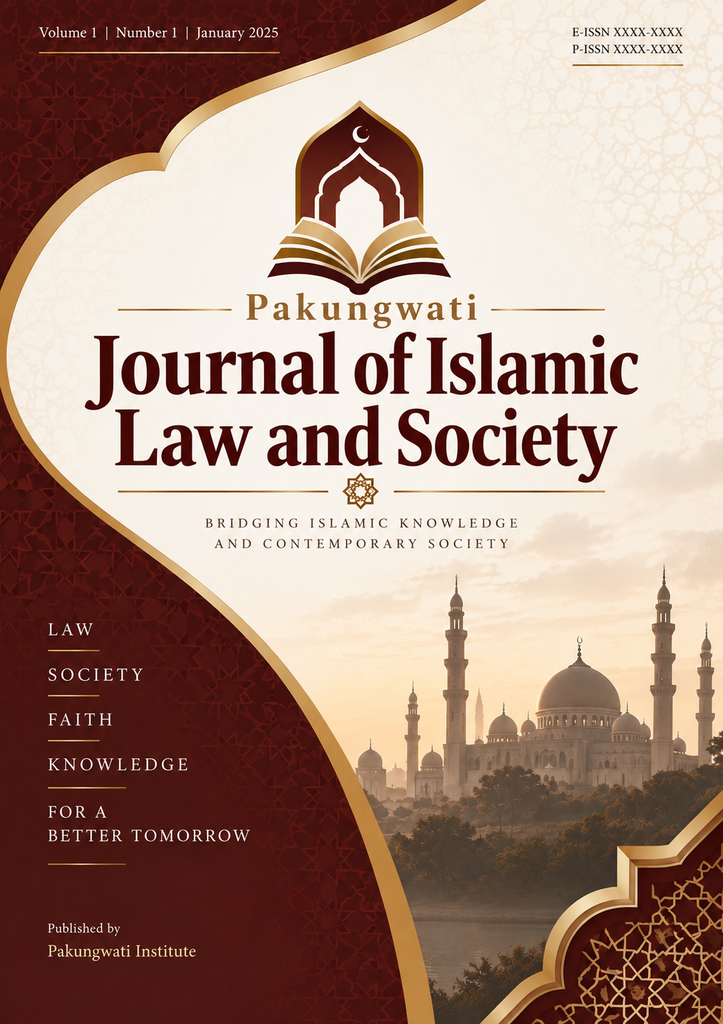
Pakungwati Journal of Islamic Law and Society (PJILS) is a peer-reviewed academic journal dedicated to advancing scholarly inquiry into Islamic law and its dynamic relationship with society. The journal provides an interdisciplinary forum for scholars, researchers, and practitioners to examine Islamic legal traditions, institutions, practices, and transformations across diverse social, cultural, political, and legal contexts. Its scope encompasses Islamic jurisprudence (fiqh), usul al-fiqh, maqasid al-shariah, Islamic family law, Islamic economic law, Islamic constitutional and political thought, comparative Islamic law, legal pluralism, gender and Islamic law, Islamic law and human rights, and contemporary developments in Islamic legal thought and practice.
Published by the Pakungwati Institute for Social Transformation and Justice under Yayasan Pawiyatan Pakungwati Cirebon, Indonesia, PJILS particularly encourages theoretically informed and methodologically rigorous research that explores Islamic law as both a normative tradition and a living social phenomenon. The journal welcomes doctrinal, comparative, historical, socio-legal, anthropological, and interdisciplinary approaches, with particular interest in studies addressing the interaction between Islamic law, state law, customary norms, social change, and questions of justice. While giving significant attention to Indonesia and Southeast Asia, PJILS welcomes contributions from different jurisdictions and Muslim societies worldwide and seeks to facilitate meaningful dialogue between Islamic legal scholarship and contemporary debates in law and society.
Pakungwati Law Review (PLR)
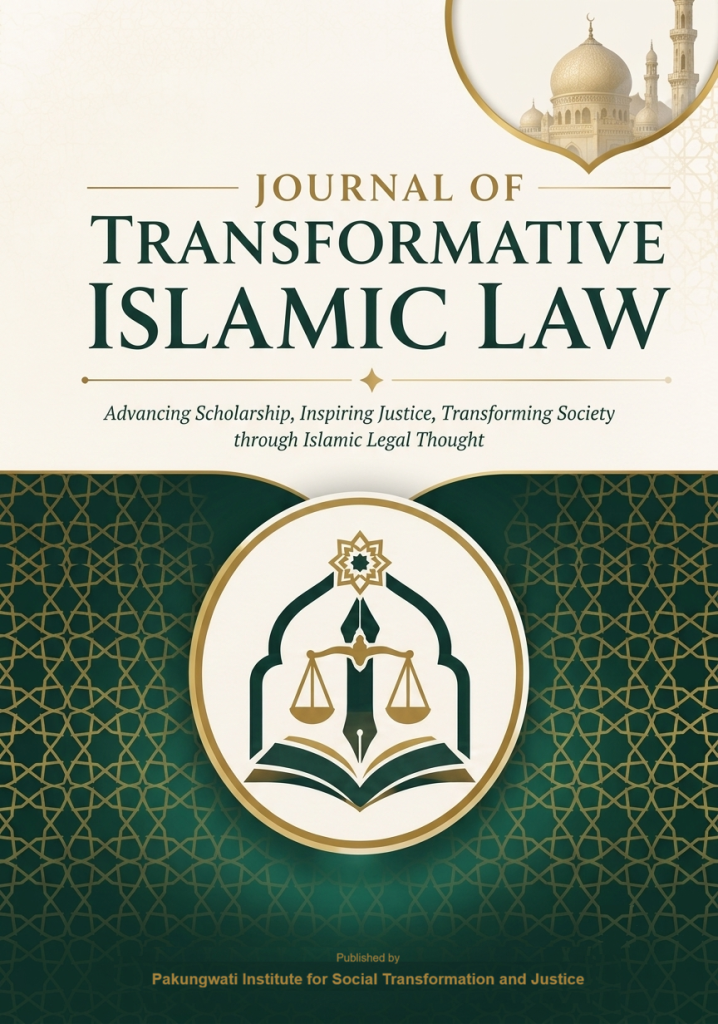
Pakungwati Law Review (PLR) is a peer-reviewed academic journal dedicated to advancing critical and interdisciplinary scholarship in law and legal studies. The journal provides a forum for scholars, researchers, practitioners, and policymakers to examine contemporary legal issues from doctrinal, comparative, empirical, socio-legal, historical, and interdisciplinary perspectives. Its scope encompasses constitutional and administrative law, criminal law, private and commercial law, international law, human rights, environmental law, law and technology, legal pluralism, access to justice, and other emerging fields of legal scholarship.
Published by the Pakungwati Institute for Social Transformation and Justice under Yayasan Pawiyatan Pakungwati Cirebon, Indonesia, PLR is particularly interested in scholarship that explores the relationship between law, society, justice, and social transformation. The journal welcomes theoretically informed and methodologically rigorous studies addressing legal developments in Indonesia and other jurisdictions, as well as comparative and transnational perspectives. By fostering dialogue across legal traditions, disciplines, and jurisdictions, Pakungwati Law Review seeks to contribute to the development of legal scholarship that is intellectually rigorous, socially responsive, and relevant to contemporary challenges of justice and legal change.